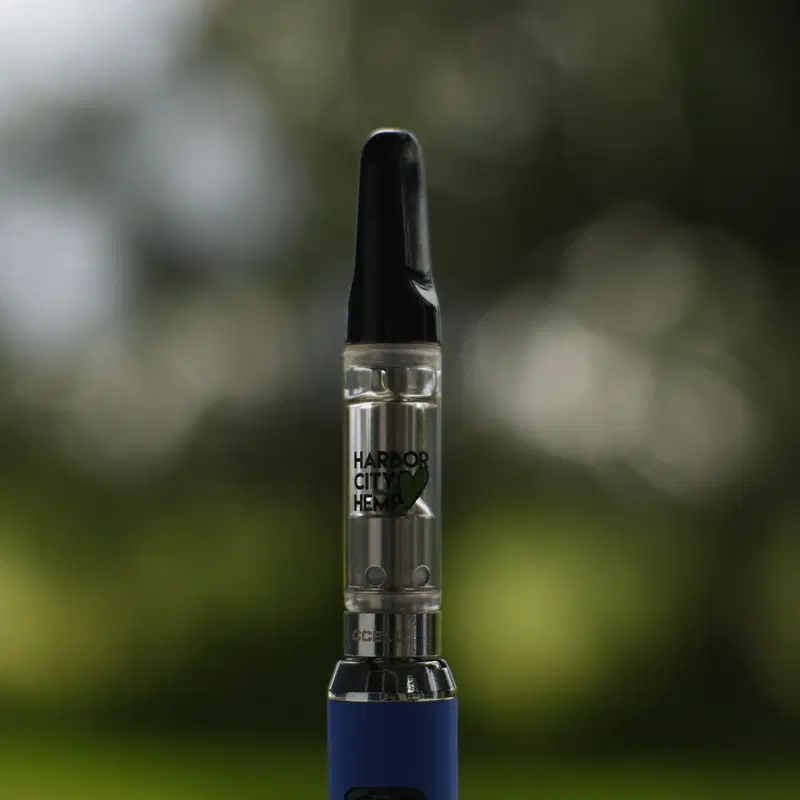







Is HHC Federally Legal?
HHC (Hexahydrocannabinol) is federally legal when derived from hemp containing less than 0.3% Delta-9 THC
Important: This page provides educational information about whether HHC is legal at the federal level. State and local laws vary significantly. This content is not legal advice – consult an attorney for specific legal guidance.
Is HHC Legal Under Federal Law?
Yes, HHC (Hexahydrocannabinol) is federally legal in the United States when properly derived from hemp. The 2018 Farm Bill legalized hemp and all hemp-derived cannabinoids, including HHC, as long as the final product contains no more than 0.3% Delta-9 THC on a dry weight basis. HHC is a hydrogenated form of THC that occurs naturally in hemp seeds and pollen, though commercial products are typically produced through the hydrogenation of CBD or Delta-8 THC.
Understanding HHC’s Legal Foundation
The 2018 Farm Bill Definition
“The term ‘hemp’ means the plant Cannabis sativa L. and any part of that plant, including the seeds thereof and all derivatives, extracts, cannabinoids, isomers, acids, salts, and salts of isomers, whether growing or not, with a delta-9 tetrahydrocannabinol concentration of not more than 0.3 percent on a dry weight basis.”
Key Legal Point: HHC falls under this definition as a hemp derivative when produced from compliant hemp starting material and meeting the 0.3% Delta-9 THC threshold.
Five Reasons Why HHC is Federally Legal
1. Hemp-Derived Cannabinoid
HHC occurs naturally in hemp and can be produced from hemp-derived CBD or Delta-8 THC through hydrogenation
2. Not Classified as THC
HHC is chemically distinct from Delta-9 THC, lacking the double bonds that define tetrahydrocannabinol compounds
3. Farm Bill Coverage
The 2018 Farm Bill explicitly includes “derivatives” and “extracts” from hemp, encompassing HHC
4. Below THC Threshold
Compliant HHC products contain less than 0.3% Delta-9 THC by dry weight
5. Molecular Stability
Hydrogenation creates a stable compound that doesn’t easily convert back to THC, maintaining legal status
DEA Position on HHC
The Drug Enforcement Administration has provided guidance on hemp-derived cannabinoids:
“All synthetically derived tetrahydrocannabinols remain Schedule I controlled substances.”
– DEA Interim Final Rule
Critical Distinction: HHC is not a tetrahydrocannabinol (THC) – it’s hexahydrocannabinol. The hydrogenation process fundamentally alters the molecular structure, removing the double bonds that characterize THC compounds. This makes HHC legally distinct from synthetic THC derivatives.
HHC Legal Status by State (2025 Update)
State Laws Create Complex Legal Landscape
While HHC is federally legal, states have taken varied approaches to regulating this cannabinoid. The legal status changes frequently as state legislatures address hemp derivatives.
States Where HHC is Legal (25+ states):
Alabama, California, Connecticut, Florida, Georgia, Indiana, Kansas, Louisiana, Maine, Massachusetts, Michigan, Minnesota, Missouri, Nebraska, New Hampshire, New Jersey, New Mexico, North Carolina, Ohio, Oklahoma, Oregon, Pennsylvania, South Carolina, South Dakota, Tennessee, Texas, Virginia, West Virginia, Wisconsin, Wyoming
States Where HHC is Prohibited (14 states):
Alaska, Arizona, Arkansas, Colorado, Delaware, Hawaii, Idaho, Illinois, Iowa, Mississippi, Nevada, New York, Rhode Island, Utah, Vermont, Washington
States with Unclear/Evolving Status:
Kentucky, Maryland, Montana, North Dakota
Important Note: State laws change rapidly. Some states that previously allowed HHC have enacted restrictions, while others continue to evaluate their positions. Always verify current state laws before purchasing.
What is HHC? The Science Behind the Legality
Understanding HHC’s chemistry helps explain its legal position:
| Aspect | HHC Details | Legal Significance |
|---|---|---|
| Chemical Name | Hexahydrocannabinol | Not a “tetrahydrocannabinol” (THC) |
| Natural Occurrence | Found in hemp seeds and pollen | Qualifies as natural hemp derivative |
| Production Method | Hydrogenation of CBD or Delta-8 | Similar to making margarine from oil |
| Molecular Structure | Saturated (no double bonds) | Chemically distinct from THC |
| Stability | Resistant to oxidation and heat | Doesn’t degrade into Delta-9 THC |
HHC vs Other Cannabinoids: Legal Comparison
| Cannabinoid | Federal Status | State Restrictions | Key Legal Factor |
|---|---|---|---|
| HHC | Legal (hemp-derived) | 14 states prohibit | Not technically THC |
| Delta-8 THC | Legal (hemp-derived) | 18+ states restrict | Natural THC isomer |
| Delta-9 THC | Legal if ≤ 0.3% | Varies by concentration | Concentration limit |
| CBD | Legal | Minimal restrictions | Non-intoxicating |
How to Verify Legal HHC Products
To ensure you’re purchasing federally compliant HHC products:
- Verify Delta-9 THC Content: COA must show less than 0.3% Delta-9 THC by dry weight
- Confirm Hemp Source: Products should clearly indicate hemp-derived origin with documentation
- Check HHC Potency: Legitimate products test specifically for HHC content and purity
- Review Lab Accreditation: Third-party labs should be ISO/IEC 17025 certified
- Verify State Compliance: Confirm HHC is not restricted in your specific state and locality
- Check Production Method: Ensure hydrogenation process starts with legal hemp cannabinoids
Common Questions About HHC Legality
Is HHC considered synthetic or semi-synthetic?
HHC occurs naturally in hemp but in trace amounts. Commercial HHC is produced through hydrogenation, which some consider semi-synthetic. However, when derived from hemp starting materials, it maintains legal status under current federal law. The key is that it’s not “synthetically derived tetrahydrocannabinol” which the DEA specifically prohibits.
Will HHC show up on a drug test?
Yes, HHC may trigger positive results on standard THC drug tests. Drug tests typically cannot distinguish between different cannabinoids and may detect HHC metabolites as THC. This is a practical consideration separate from legal status – you could be legally using HHC but still test positive.
Why are some states banning HHC if it’s federally legal?
States have the authority to regulate substances more strictly than federal law. Some states classify HHC as a “synthetic” or “semi-synthetic” cannabinoid, leading to restrictions despite federal legality. Others are concerned about the intoxicating effects and lack of regulation.
How does HHC compare to Delta-8 THC legally?
Both are federally legal when hemp-derived, but HHC has faced fewer state-level restrictions than Delta-8 THC. This may be because HHC is newer to the market and less well-known to regulators. However, this is changing as states become more aware of HHC.
Is HHC safe to use?
While HHC’s legal status is established, safety data is limited. The FDA has not approved HHC for therapeutic use, and long-term effects are unknown. Like all cannabinoids, quality varies significantly between manufacturers. Only purchase from reputable companies with comprehensive testing.
Recent HHC Legal Developments (2024-2025)
Federal Level
- No federal agencies have scheduled HHC as a controlled substance despite some enforcement confusion
- Federal agencies continue monitoring novel hemp-derived cannabinoids like HHC
- Industry groups push for clearer federal guidelines distinguishing natural vs. synthetic cannabinoids
- Congressional discussions about updating the Farm Bill to address intoxicating hemp derivatives
State-Level Trends
- New Restrictions: Several states added HHC to existing Delta-8 bans in 2024
- Age Limits: Some states implementing 21+ restrictions similar to alcohol
- Testing Requirements: Increasing demands for rigorous third-party testing
- Potency Caps: Some jurisdictions considering limits on HHC concentration per package
Industry Response
The hemp industry has proactively developed quality standards and self-regulation measures for HHC products, working with state regulators to establish reasonable frameworks.
HHC Production and Legal Compliance
Understanding HHC production helps clarify its legal status:
| Production Stage | Legal Requirement | Compliance Check |
|---|---|---|
| Starting Material | Must be federally compliant hemp | COA showing <0.3% Delta-9 THC |
| Extraction Process | Extract CBD or Delta-8 from hemp | Documented chain of custody |
| Hydrogenation | Convert to HHC using hydrogen gas | Process documentation and purity testing |
| Final Product | Must contain <0.3% Delta-9 THC | Third-party lab verification |
| Distribution | Only to legal jurisdictions | State law compliance verification |
The Future of HHC Legality
Several factors will influence HHC’s future legal status:
Potential Federal Changes
- Farm Bill reauthorization discussions may address intoxicating hemp derivatives
- Federal agencies may develop specific regulations for hemp-derived cannabinoids
- DEA could provide clearer guidance on semi-synthetic vs. synthetic cannabinoids
- Congressional action on comprehensive cannabis reform could affect HHC classification
State-Level Evolution
- More states likely to regulate or restrict intoxicating hemp derivatives
- Development of comprehensive hemp cannabinoid frameworks
- Potential interstate commerce agreements for hemp products
- Industry consolidation leading to better self-regulation
Industry Trends
- Improved testing standards and quality control measures
- Development of age verification and responsible marketing practices
- Research into HHC’s effects and safety profile
- Innovation in production methods and product formulations
Is HHC Legal in Major Cities?
City-level regulations can differ from state laws. Here’s the status in major metropolitan areas:
Legal in Major Cities:
Los Angeles, CA • Miami, FL • Atlanta, GA • Chicago, IL (state prohibited) • Boston, MA • Detroit, MI • Charlotte, NC • Houston, TX • Virginia Beach, VA
Prohibited in Major Cities:
Phoenix, AZ • Denver, CO • Boise, ID • Las Vegas, NV • New York City, NY • Salt Lake City, UT • Seattle, WA
Local Ordinances: Some cities within legal states have enacted their own restrictions. Always check local municipal codes before purchasing HHC products.
Last Updated: January 2025
Disclaimer: This information is educational only and does not constitute legal advice. HHC laws are complex and changing rapidly across jurisdictions. Harbor City Hemp products are not intended for use in states or localities where prohibited. We reserve the right to refuse sales to any location where legality is uncertain. Always verify current federal, state, and local laws in your jurisdiction and consult with a qualified attorney for specific legal guidance. This page will be updated as laws evolve.